Differenze tra le versioni di "I “tuddhi”/en"
(Creata pagina con "Before the invention of plastic toys in every possible shape, small objects were used from children to have fun with their friends. In the game of “tuddhi”, five pebbles w...") |
(Creata pagina con "Children were meeting in the street, sitting down on a rung, and the challenge was started. The pebbles were thrown up and then caught again with different positions of the ha...") |
||
| Riga 7: | Riga 7: | ||
Before the invention of plastic toys in every possible shape, small objects were used from children to have fun with their friends. In the game of “tuddhi”, five pebbles were used from each player, challenging the other with your own manual ability. | Before the invention of plastic toys in every possible shape, small objects were used from children to have fun with their friends. In the game of “tuddhi”, five pebbles were used from each player, challenging the other with your own manual ability. | ||
| − | + | Children were meeting in the street, sitting down on a rung, and the challenge was started. The pebbles were thrown up and then caught again with different positions of the hand. Positions were getting more complicated at each throw and each position had a name: full hand (“a manu china”); take and give (“lassa e prendi”); nun (“a monaca”) and many others. | |
Il turno del giocatore successivo era una conseguenza dell’errore del primo, che era quindi costretto a star fermo un giro. Vinceva il giocatore che aveva totalizzato un '''punteggio più alto'''. | Il turno del giocatore successivo era una conseguenza dell’errore del primo, che era quindi costretto a star fermo un giro. Vinceva il giocatore che aveva totalizzato un '''punteggio più alto'''. | ||
Versione delle 11:04, 1 feb 2016
| I “tuddhi”/en | |
|---|---|
| Comune | Lecce |
| Tipologia | Tradizioni Ludiche |
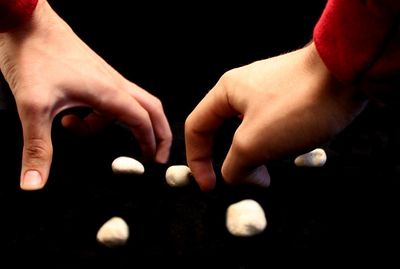
Before the invention of plastic toys in every possible shape, small objects were used from children to have fun with their friends. In the game of “tuddhi”, five pebbles were used from each player, challenging the other with your own manual ability.
Children were meeting in the street, sitting down on a rung, and the challenge was started. The pebbles were thrown up and then caught again with different positions of the hand. Positions were getting more complicated at each throw and each position had a name: full hand (“a manu china”); take and give (“lassa e prendi”); nun (“a monaca”) and many others.
Il turno del giocatore successivo era una conseguenza dell’errore del primo, che era quindi costretto a star fermo un giro. Vinceva il giocatore che aveva totalizzato un punteggio più alto.

| I “tuddhi”/en | |
|---|---|
| Comune | Lecce |
| Tipologia | Tradizioni Ludiche |
Before the invention of plastic toys in every possible shape, small objects were used from children to have fun with their friends. In the game of “tuddhi”, five pebbles were used from each player, challenging the other with your own manual ability.
Come in molti paesi del Salento, nei cortili della città e sugli usci delle case i bambini si incontravano per giocare a “tuddhi”. Seduti per terra o su piccoli sgabelli, lanciavano in aria i sassolini per poi riprenderli ponendo le mani in diverse posizioni, sempre più complesse: “a mano piena (“a manu china”), a lascia e prendi (“lassa e pija”), a monaca, a taranta e via dicendo.
Il turno del giocatore successivo era una conseguenza dell’errore del primo, che era quindi costretto a star fermo un giro. Vinceva il giocatore che aveva totalizzato un punteggio più alto.
