Differenze tra le versioni di "Paesaggio pietroso di Acquarica/en"
(Creata pagina con "The stony landscape of Acquarica") |
(Creata pagina con "The area of Acquarica di Lecce, part of the municipality of Vernole, has a cultural and natural heritage showed in the path Ecomuseo dei Paesaggi di Pietra. The landscape is...") |
||
| Riga 5: | Riga 5: | ||
|tipologia=Conoscenza della Natura | |tipologia=Conoscenza della Natura | ||
}} | }} | ||
| − | + | The area of Acquarica di Lecce, part of the municipality of Vernole, has a cultural and natural heritage showed in the path Ecomuseo dei Paesaggi di Pietra. | |
| − | + | The landscape is characterised from the typical dry stone constructions, of walls and “pagliare” (small houses). The soil, despite its stony nature, is fertile thanks to the hard work done day by day from the farmers. | |
| − | + | The most important location of Ecomuseo dei Paesaggi di Pietra is the archaeological site of Pozzo Seccato. In this site, it was discovered a masseria (real estate) from the 4th century, surrounded from fortification walls. | |
[[File:VERNOLE Acquarica paesaggio pietroso.jpg|400px]] | [[File:VERNOLE Acquarica paesaggio pietroso.jpg|400px]] | ||
Versione delle 11:38, 4 feb 2016
| Paesaggio pietroso di Acquarica/en | |
|---|---|
| Comune | Vernole |
| Tipologia | Conoscenza della Natura |
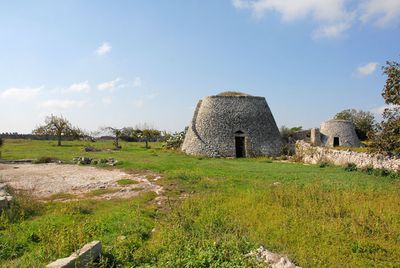
The area of Acquarica di Lecce, part of the municipality of Vernole, has a cultural and natural heritage showed in the path Ecomuseo dei Paesaggi di Pietra. The landscape is characterised from the typical dry stone constructions, of walls and “pagliare” (small houses). The soil, despite its stony nature, is fertile thanks to the hard work done day by day from the farmers. The most important location of Ecomuseo dei Paesaggi di Pietra is the archaeological site of Pozzo Seccato. In this site, it was discovered a masseria (real estate) from the 4th century, surrounded from fortification walls.

| Paesaggio pietroso di Acquarica/en | |
|---|---|
| Comune | Vernole |
| Tipologia | Conoscenza della Natura |
Ad Acquarica di Lecce, piccola frazione di Vernole, il territorio è raccontato da un prezioso insieme di beni culturali e testimonianze immateriali che costituiscono l’Ecomuseo dei Paesaggi di pietra. La pietra è quindi protagonista dell’intera zona, comunque particolarmente fertile grazie all’instancabile opera dei contadini e costellata di costruzioni a secco, dai muretti alle caratteristiche “pagghiare”. Cuore del paesaggio è l’importante area archeologica di Pozzo Seccato, oggetto di scavi archeologici che hanno portato alla luce una masseria fortificata della fine del IV sec. a.C., circondata da un grande muro di fortificazione.
