Differenze tra le versioni di "Lavorazione del ferro battuto/en"
(Creata pagina con "Working with wrought iron is an ancient and difficult technique. It was very popular in the 17th century and it has been used to decorate several churches.") |
(Creata pagina con "The presence of these artisans in Cavallino is demonstrated from the manifestation of several monuments in the town centre, made in wrought iron either from the traditional wa...") |
||
| Riga 9: | Riga 9: | ||
Working with wrought iron is an ancient and difficult technique. It was very popular in the 17th century and it has been used to decorate several churches. | Working with wrought iron is an ancient and difficult technique. It was very popular in the 17th century and it has been used to decorate several churches. | ||
| − | + | The presence of these artisans in Cavallino is demonstrated from the manifestation of several monuments in the town centre, made in wrought iron either from the traditional way or from some experimental methods. | |
[[File:Cavallino ferro battuto.jpg|400px]] | [[File:Cavallino ferro battuto.jpg|400px]] | ||
Versione attuale delle 10:35, 1 feb 2016
| Lavorazione del ferro battuto/en | |
|---|---|
| Comune | Cavallino |
| Tipologia | Tradizioni Artigianali |
Many artisans working with the wrought iron are based in the town of Cavallino.
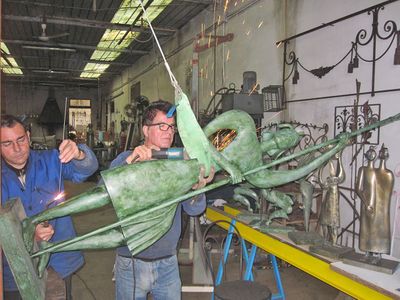
Working with wrought iron is an ancient and difficult technique. It was very popular in the 17th century and it has been used to decorate several churches.
The presence of these artisans in Cavallino is demonstrated from the manifestation of several monuments in the town centre, made in wrought iron either from the traditional way or from some experimental methods.

| Lavorazione del ferro battuto/en | |
|---|---|
| Comune | Cavallino |
| Tipologia | Tradizioni Artigianali |
Many artisans working with the wrought iron are based in the town of Cavallino.
Working with wrought iron is an ancient and difficult technique. It was very popular in the 17th century and it has been used to decorate several churches.
La diffusione di questa pratica artigianale a Cavallino si rispecchia in alcuni monumenti che abbelliscono il centro del paese, realizzati in ferro battuto da artisti locali che utilizzano sia tecniche tradizionali sia sperimentazioni contemporanee.
