(Creata pagina con "Costruzione dei muretti a secco") |
|||
| (5 versioni intermedie di uno stesso utente non sono mostrate) | |||
| Riga 5: | Riga 5: | ||
|tipologia=Tradizioni Artigianali | |tipologia=Tradizioni Artigianali | ||
}} | }} | ||
| − | + | “Muretti a secco” are dry stones walls, characterizing the countryside in the area of Salento. It was a technique used in the past, and the ones that can be observed today are mostly from that time. However, this typical construction method is still used today, especially in the area of Melendugno. | |
| − | + | Dry stones wall and “pagliare”, small refuges/houses constructed with the same techiniques, characterise the landscape of Salento. This low wall were initially realised with the stones removed from the soil to be cultivated and they were useful as well to define the borders of the property. “Pagliare” were mainly used to keep the agricultural tools and they were used as a refuge, in case of bad weather during the working time. | |
| − | + | These peculiar architectures are “monuments” of the agricultural culture of Salento. | |
| − | + | [[File:MELENDUGNO Muretto a secco.jpg|400px]] | |
Versione attuale delle 11:36, 3 feb 2016
| Costruzione dei muretti a secco/en | |
|---|---|
| Comune | Melendugno |
| Tipologia | Tradizioni Artigianali |
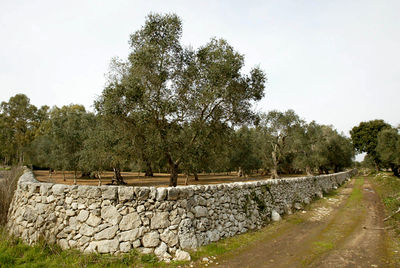
“Muretti a secco” are dry stones walls, characterizing the countryside in the area of Salento. It was a technique used in the past, and the ones that can be observed today are mostly from that time. However, this typical construction method is still used today, especially in the area of Melendugno.
Dry stones wall and “pagliare”, small refuges/houses constructed with the same techiniques, characterise the landscape of Salento. This low wall were initially realised with the stones removed from the soil to be cultivated and they were useful as well to define the borders of the property. “Pagliare” were mainly used to keep the agricultural tools and they were used as a refuge, in case of bad weather during the working time.
These peculiar architectures are “monuments” of the agricultural culture of Salento.

| Costruzione dei muretti a secco/en | |
|---|---|
| Comune | Melendugno |
| Tipologia | Tradizioni Artigianali |
Le campagne del Salento sono caratterizzate dalla diffusione di architetture realizzate a secco. Molte di queste costruzioni hanno antiche origini, ma ancora oggi c’è chi si occupa di edificare nuove strutture a secco, in particolar modo nella zona di Melendugno.
Muretti a secco e “pagliare”, casupole fatte di sole pietre, disegnano il paesaggio salentino. Spesso i muri bassi venivano realizzati impiegando le pietre rinvenute nei terreni circostanti e servivano a delimitare le proprietà o a scandire il corso dei sentieri rurali, mentre le “pagliare” offrivano riparo ai contadini e ai loro attrezzi da lavoro.
Si tratta di veri e propri “monumenti” della civiltà contadina e l’arte di costruire a secco rappresenta un prezioso aspetto della cultura del Salento.