Differenze tra le versioni di "Cotognata/en"
Da SAC Terre di Lupiae .
(Creata pagina con "Cotognata is made from quince, crossbreed of apple and pear. In the patisseries around the city it is not preserved in glass jars but it is made with a more solid texture and...") |
(Creata pagina con "Many desserts are filled with cotognata, such as “fruttoni”, “pasta di mandorla”, and other small pastries used in different festivities during the year. This peculiar...") |
||
| Riga 9: | Riga 9: | ||
Cotognata is made from quince, crossbreed of apple and pear. In the patisseries around the city it is not preserved in glass jars but it is made with a more solid texture and then placed in small pieces in charming wood boxes. | Cotognata is made from quince, crossbreed of apple and pear. In the patisseries around the city it is not preserved in glass jars but it is made with a more solid texture and then placed in small pieces in charming wood boxes. | ||
| − | + | Many desserts are filled with cotognata, such as “fruttoni”, “pasta di mandorla”, and other small pastries used in different festivities during the year. This peculiar jam can be used for culinary experiments, combined with salty products as well. | |
[[File:LECCE cotognata.jpg|400px]] | [[File:LECCE cotognata.jpg|400px]] | ||
Versione delle 12:01, 2 feb 2016
| Cotognata/en | |
|---|---|
| Comune | Lecce |
| Tipologia | Tradizioni Culinarie |
Cotognata is a very peculiar jam, used in the preparation of several desserts, but it can be tasted even alone. Cotognata is a traditional recipe from the area of Salento, with a unique smell and not too sweet taste.
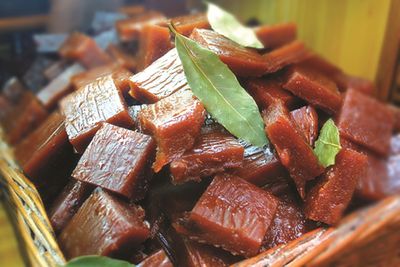
Cotognata is made from quince, crossbreed of apple and pear. In the patisseries around the city it is not preserved in glass jars but it is made with a more solid texture and then placed in small pieces in charming wood boxes.
Many desserts are filled with cotognata, such as “fruttoni”, “pasta di mandorla”, and other small pastries used in different festivities during the year. This peculiar jam can be used for culinary experiments, combined with salty products as well.